
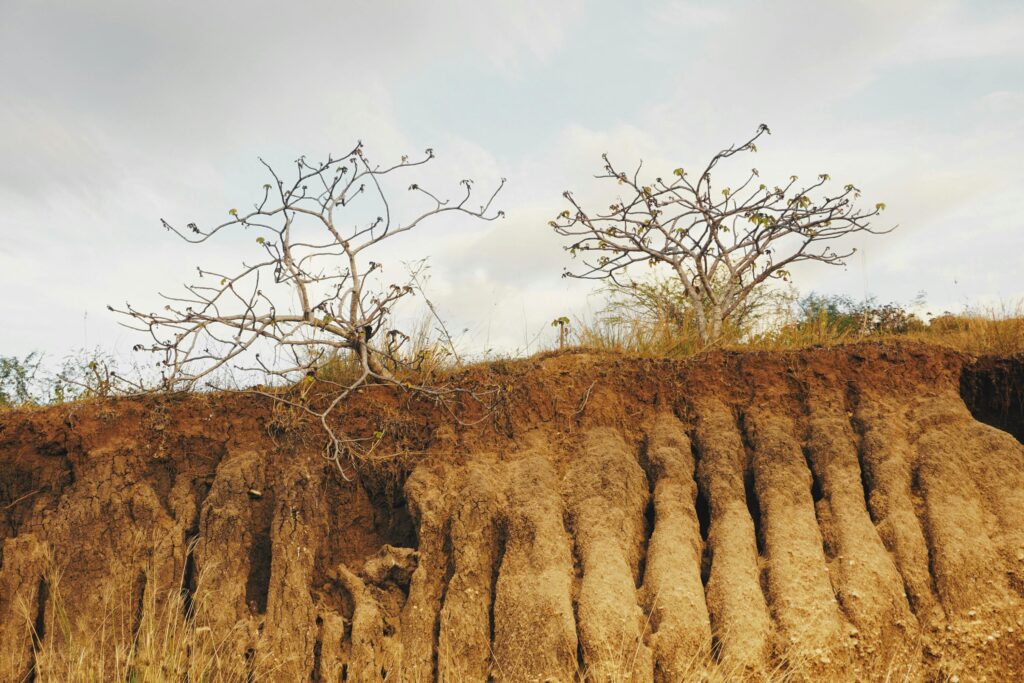

CRACKS IN THE LAND: HOW SOIL EROSION IS THREATENING TANZANIA’S FUTURE
A GROWING ENVIRONMENTAL CRISIS
Across northern Tanzania, deep gullies are cutting through fertile farmland, grazing areas, roads and even villages. What was once a slow, natural process of soil erosion has accelerated into a major environmental and humanitarian challenge. These expanding gullies are undermining food security, damaging infrastructure and threatening ecosystems.
WHY IS SOIL EROSION GETTING WORSE?

- Tanzania’s highlands are naturally vulnerable due to steep terrain, fragile volcanic soils and highly variable rainfall. However, human pressures have intensified the problem. Rapid population growth now exceeding 70 million has increased demand for farmland and settlement space.
- Large areas of forest and savannah have been cleared for agriculture. Traditional seasonal grazing practices that once allowed land to recover have largely been replaced by permanent settlement and year-round grazing. Livestock numbers have also risen significantly, leaving soils exposed.
- When heavy rains follow dry spells, water rushes across bare land, carving deep gullies. Once formed, these gullies expand rapidly, stripping away nutrient-rich topsoil and preventing vegetation from regenerating.
- Soil erosion rates are now estimated to be about 20 times higher than they were a century ago. More than half of Tanzania’s land is experiencing rapid degradation.
- The consequences are severe. Around 70% of Tanzanians rely on smallholder farming, meaning land degradation directly threatens livelihoods and food supply. Over half of the population already faces moderate to severe food insecurity.
- Infrastructure is also at risk. Roads and bridges are being undermined within years of construction, cutting off farmers from markets and reinforcing cycles of low income and limited investment.
- Eroded soil is filling lakes and reservoirs with sediment, reducing water availability and harming biodiversity. For example, Lake Manyara National Park, a UNESCO Biosphere Reserve known for its rich wildlife and over 350 bird species, is increasingly affected by sediment flowing in from degraded surrounding land.
THE COST OF LOSING FERTILE LAND

CAN THE DAMAGE BE REVERSED?
- Solutions exist and many are rooted in indigenous knowledge.
- Techniques such as earth bunds, terraces, small check dams and replanting grasses and trees help slow water flow and trap soil.
- Community-led restoration efforts supported by NGOs are showing promising results in stabilizing smaller gullies and improving soil quality. However, larger “mega gullies” require coordinated national investment and long-term planning.
A RACE AGAINST TIME
Soil erosion in Tanzania is no longer just an environmental issue but it is an economic and social challenge. With more than half the population under 18, restoring degraded landscapes is essential to securing food systems, protecting infrastructure and safeguarding biodiversity for future generations.
Without urgent and coordinated action, the cracks in the land may continue to widen along with the risks to Tanzania’s future.