
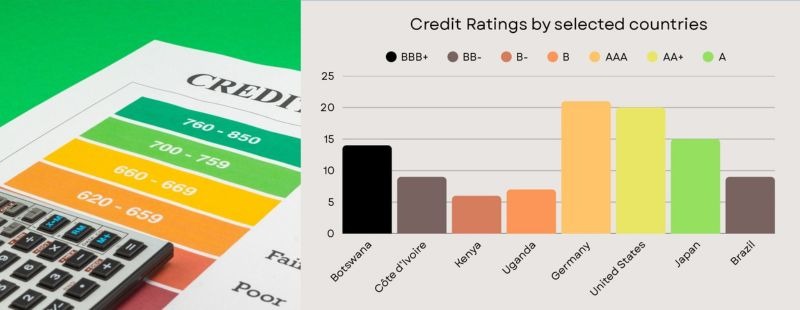
 WHY CREDIT RATINGS MATTER FOR AFRICA’S DEVELOPMENT
- Credit ratings significantly influence access to international capital markets. Strong ratings lower borrowing costs, while poor ratings raise them and sometimes unfairly.
- In Africa, where data scarcity is common, ratings become a key proxy for investor decision-making, even when incomplete or biased.
- The shift from concessional financing to market-based lending makes ratings more crucial than ever.
 CHALLENGES FOR AFRICAN COUNTRIES
- Capacity Gaps: Many governments lack familiarity with rating methodologies, leading to poor engagement with agencies like Moody’s Fitch, and S&P.
- Subjectivity and Bias: Governance indicators and political judgments often rely on external perceptions (e.g., World Bank indicators) that may not reflect ground realities.
- Undue Penalties: Voluntary debt restructurings and proactive fiscal reforms can be wrongly penalized as risk events.
- Limited Transparency: Agencies often blend model-based scores with opaque qualitative adjustments, reducing clarity
 PROMISING REFORMS
- Africa Credit Ratings Resource Platform: Provides training, data access, and expert support to help countries engage more effectively.
- Consilium Expert Network: Former agency analysts help governments improve technical preparation and narrative framing for ratings.
- UN Outcome Document from Seville (FFD Conference) which emphasized more transparent methodologies, long-term scenario-based analysis in sovereign ratings, capacity building to empower governments and more inclusive dialogue between states and agencies
 RECOMMENDATIONS
- Invest in technical expertise: To understand and engage with rating agencies effectively.
- Align reforms with ratings goals: Enhance fiscal transparency, debt management, and domestic revenue mobilization.
- Build domestic capital markets to reduce reliance on volatile foreign currency debt.
Support African-based credit agencies (e.g. - Bloomfield investment Corporation, Augusto & Co.) to diversify perspectives and ratings coverage.
- Engage in borrower forums and peer learning groups to shape collective bargaining and share best practices.
 CONCLUSION
Credit ratings are not just financial tools, they shape perceptions, influence investment flows, and affect national sovereignty. African policymakers must treat engagement with rating agencies as a strategic endeavor, not an administrative task. Proactive preparation, collective regional initiatives, and thoughtful reforms are the pathways toward fairer ratings and stronger development outcomes.